Best Automatic Garden Watering System UK: The Ultimate Guide to Automatic Irrigation Systems
In our hands-on testing of best products, we found that a practical, no-nonsense guide to choosing and installing the best automatic garden watering system UK gardens actually need — covering timers, smart controllers, drip irrigation, and multi-zone setups for the unpredictable British climate in 2026.
Why Your Garden Needs Automatic Watering in 2026

The best automatic garden watering system UK gardeners can invest in isn't a luxury anymore — it's borderline essential. After the hosepipe restrictions we saw across parts of England in recent summers, having a programmable system that uses water efficiently isn't just convenient. It's responsible.
I've got a compact terrace garden here in East Belfast, and honestly, keeping container plants alive through July used to be a daily chore. Forgetting even one evening meant wilted tomatoes by morning. A decent garden water timer changed that completely.
Here's what the numbers look like. Manual watering with a standard hosepipe uses roughly 15–20 litres per minute. A drip irrigation system paired with a programmable water timer delivers between 2–4 litres per hour per emitter — a reduction of up to 70% in water usage for the same growing results. The Which? consumer guides have consistently highlighted water efficiency as a top buying factor for garden products this year.
So what's actually driving people to automate? Three things: water bills (up 7.5% on average across England and Wales for 2025/26), unpredictable rainfall patterns, and the sheer convenience of not having to remember.
Types of Automatic Garden Watering Systems Explained

Not all irrigation setups suit every garden. The right choice depends on your plot size, plant types, and how hands-off you want to be.
Drip Irrigation Systems
Drip systems deliver water directly to plant roots through narrow tubing with inline emitters spaced every 30–50cm. Brilliant for borders, raised beds, and vegetable patches. Flow rates typically sit between 2–8 litres per hour per dripper. They're the most water-efficient option by a clear margin.
Sprinkler Systems with Timers
A sprinkler timer controls pop-up or oscillating sprinklers across lawn areas. Coverage ranges from 3m radius for micro-sprinklers up to 12m+ for gear-driven rotors. These use more water — typically 8–15 litres per minute — but they're the only practical solution for large lawns. A dedicated sprinkler timer lets you run them at dawn when evaporation is lowest.
Soaker Hose Systems
Porous hoses that weep water along their entire length. Dead simple to install. They work well along hedgerows and established borders but offer less precision than drip lines. Expect around 4–6 litres per metre per hour.
Multi-Zone Smart Systems
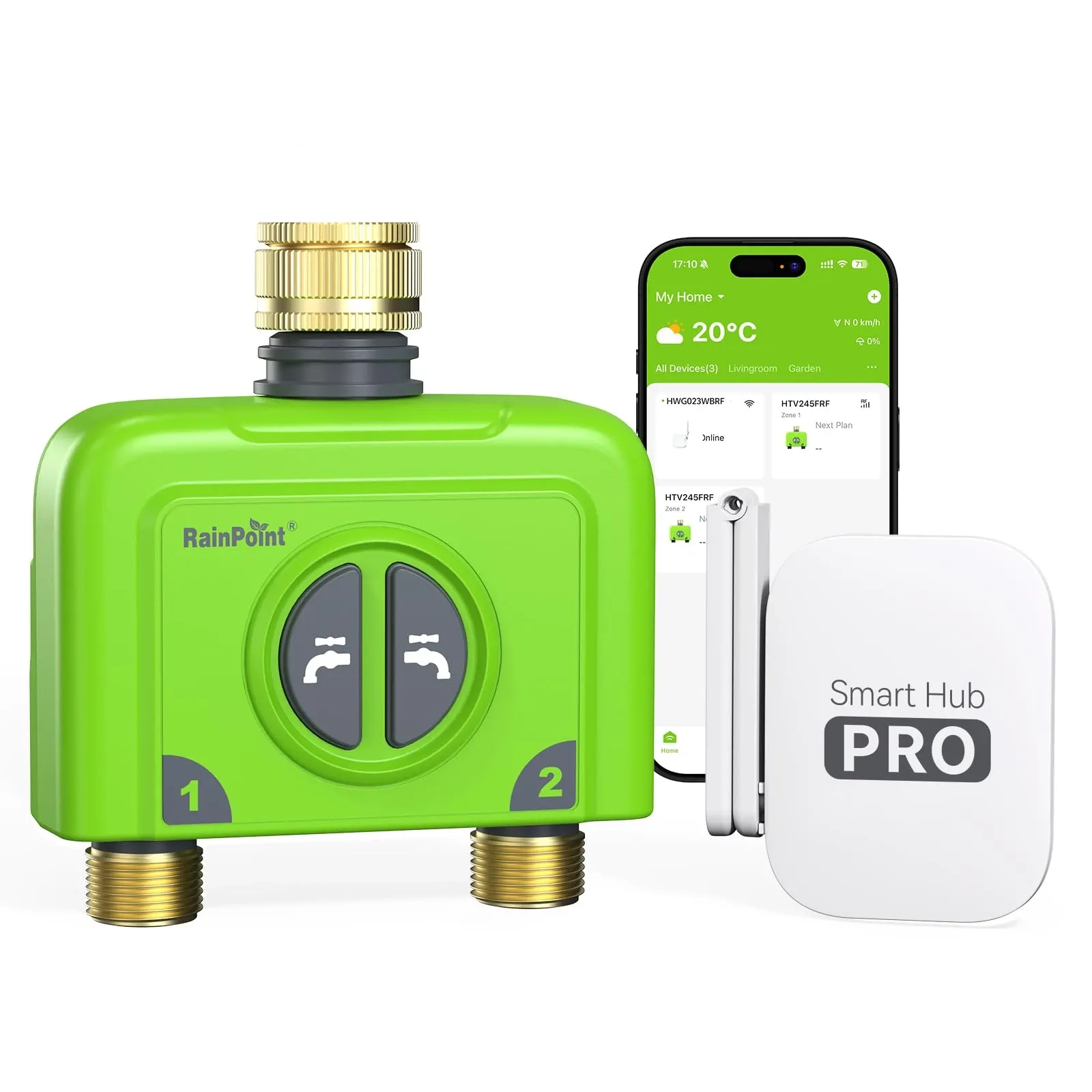
These use a two zone water timer (or more) to run different watering schedules for different garden areas simultaneously. Your lawn might need 20 minutes every other day, while your hanging baskets want 5 minutes twice daily. Smart controllers handle this without you lifting a finger.
How to Choose the Best Automatic Garden Watering Timer
The timer is the brain of any automatic irrigation system. Get this wrong and nothing else matters. Here's what to actually look for.
Connection Type
Most UK garden taps use a standard 3/4-inch BSP thread. Your watering timer for garden tap needs to fit this without adaptors — adaptors leak, always. Check the thread size before ordering. Some European imports use metric fittings that won't mate properly with British plumbing.
Programming Flexibility
At minimum, you want: adjustable watering duration (1 minute to 3+ hours), frequency settings (multiple times daily down to once weekly), and a manual override button. The rainpoirrig programmable digital water timer offers weather-resistant construction with full scheduling control — I've had one running on my back terrace since spring 2025 and it's handled everything Belfast weather has thrown at it.
Battery Life
Most standalone timers run on 2x AA batteries. Decent units last 6–12 months on a single set. Cheap ones drain in 8 weeks. Look for low-power LCD displays and efficient solenoid valves — these are the two biggest battery drains.
Water Pressure Compatibility
UK mains water pressure typically ranges from 1–3 bar at the garden tap. Your irrigation timer needs to operate within this range. Some systems designed for higher-pressure markets won't open their valves below 1.5 bar — a real problem for older UK properties where pressure can drop to 0.7 bar during peak usage.
Smart Wi-Fi Water Timers: Are They Worth the Extra Spend?

Yes. Well, actually — it depends on your garden size. For a single hanging basket timer, probably overkill. For anything with multiple zones or if you travel regularly, a wifi water timer pays for itself in convenience and water savings within one season.
The best wifi water timer options in 2026 connect to your home network and let you adjust schedules from your phone. Some integrate with Alexa or Google Assistant for voice control. The real value, though? Rain delay features. When your smart water tap timer detects rainfall (via weather API data or an optional sensor), it skips the next scheduled cycle automatically.
What Smart Timers Offer Over Basic Models
- Remote access: Adjust watering from anywhere — handy during holidays
- Weather integration: Automatic rain delays save 15–25% additional water
- Usage tracking: See exactly how many litres you're using per week
- Multi-zone control: Run different schedules per zone from one app
- Alerts: Get notified if water flow stops (broken pipe) or runs too long
The best smart water timer for garden use needs reliable Wi-Fi range to your tap location. My tap is about 8 metres from my router through one brick wall, and the signal holds fine. If yours is further out, look for systems with RF gateway extenders — some models offer up to 300m range via a separate hub.
On the policy side, GOV.UK water efficiency guidelines now actively encourage smart irrigation controllers as part of household water conservation strategies, particularly in water-stressed regions of South East England.
UK Automatic Watering System Comparison: 2026 Specs & Features

I've pulled together the key specifications that matter for UK buyers. This covers the main categories you'll encounter when searching for the best automatic garden watering system UK retailers stock this summer.
| Feature | Basic Mechanical Timer | Programmable Digital Timer | Smart Wi-Fi Timer (Single Zone) | Smart Multi-Zone Controller |
|---|---|---|---|---|
| Price Range (UK) | £8–£15 | £20–£45 | £40–£75 | £65–£130 |
| Zones | 1 | 1 | 1 | 2–6 |
| Scheduling | Twist dial (up to 120 min) | Up to 16 programmes/day | Unlimited via app | Per-zone independent schedules |
| Rain Delay | No | Manual only | Automatic (weather API) | Automatic + sensor option |
| Power Source | None (mechanical) | 2x AA (6–12 months) | 2x AA or USB (8–10 months) | Mains or 4x AA |
| Min Operating Pressure | 0.5 bar | 0.5 bar | 0.8 bar | 1.0 bar |
| Smart Home Compatible | No | No | Alexa / Google | Alexa / Google / IFTTT |
| Best For | Single container/bed | Small-medium gardens | Medium gardens, tech-savvy users | Large gardens, multiple areas |
For most UK gardens under 50m², a programmable digital timer like the Rainpoirrig weather-resistant digital water timer hits the sweet spot between functionality and value. You get proper scheduling without needing Wi-Fi infrastructure at your outdoor tap.
Installation Guide: Setting Up Your Automatic Irrigation System

Getting a system installed properly takes about 2–4 hours for an average UK garden. Here's the process I followed for my own terrace setup, and it applies to most configurations.
Step 1: Plan Your Layout
Sketch your garden. Mark every plant group, container, and lawn area. Note distances from the tap. Drip tubing runs shouldn't exceed 30 metres from the timer without a pressure drop becoming an issue. For longer runs, you'll need 16mm main supply pipe stepping down to 4mm micro-tubing at each plant.
Step 2: Fit the Timer to Your Tap
Thread your automatic garden watering timer directly onto the tap. Use a rubber washer (included with any decent timer) and hand-tighten firmly. Don't use PTFE tape on hose connections — it's designed for permanent pipe joints, not quick-connect fittings. Check for drips under pressure before burying any tubing.
Step 3: Run Your Main Supply Line
Lay 13mm or 16mm polyethylene pipe along your main route. Secure with ground pegs every 50–60cm. Use elbow connectors for 90-degree turns — don't kink the pipe. Cut with sharp secateurs for clean ends that seal properly in push-fit connectors.
Step 4: Add Emitters or Sprinklers
Punch holes in the main line using a proper hole punch tool (not a nail — I learned that the hard way). Insert 4mm barbed connectors and run micro-tubing to individual drippers or micro-sprinklers. Position drippers 5–10cm from plant stems, not directly on them.
Step 5: Programme and Test
Set your irrigation timer to run a 5-minute test cycle. Walk the entire system checking for leaks, blocked emitters, and dry spots. Adjust dripper positions as needed. Then set your actual schedule — early morning (5–7am) is ideal for UK conditions, reducing evaporation and fungal disease risk.
Seasonal Maintenance for British Weather
The UK climate is uniquely challenging for irrigation equipment. Frost, limescale, and algae all take their toll. Here's a seasonal breakdown.
Spring (March–April)
Reconnect your system after winter storage. Flush all lines for 2 minutes before attaching end caps. Replace batteries in your water timer for hosepipe connections. Check all rubber washers — they perish over winter. This spring I replaced three that had cracked, cost me about £2 total.
Summer (May–September)
Monitor and adjust. Hot spells mean increasing frequency — perhaps twice daily for containers. The best garden hose timer UK models let you add extra cycles without reprogramming the whole schedule. Clean filters monthly. Watch for algae growth in transparent tubing (use opaque black pipe to prevent this).
Autumn/Winter (October–February)
Drain the entire system before first frost. Water expands 9% when freezing — that's enough to split any fitting or crack a solenoid valve. Remove your timer, take out batteries, and store indoors. Coil tubing loosely in a shed. Don't leave anything pressurised outdoors below 0°C.
The BSI (British Standards Institution) recommends that outdoor water fittings used in the UK meet frost resistance ratings suitable for temperatures down to -10°C — worth checking product specifications before buying if you plan to leave any components installed year-round.
Frequently Asked Questions
What is the best automatic garden watering system UK gardeners should buy in 2026?
For most UK gardens, a programmable digital water timer paired with a drip irrigation kit offers the best balance of cost and performance. Budget £25–£50 for the timer and £30–£60 for tubing and emitters. Smart Wi-Fi models suit larger gardens or frequent travellers, typically costing £50–£80 for a single-zone controller with app access and weather-based rain delays.
Can I use an automatic watering timer with low water pressure?
Yes, but check minimum operating pressure. Most digital timers need at least 0.5 bar to open their solenoid valves. Drip systems work from 0.5–1.0 bar, while sprinklers need 1.5 bar minimum for proper spray radius. Older UK properties often have tap pressure below 1 bar during peak hours — test yours with a £10 pressure gauge before buying.
How much water does an automatic irrigation system save compared to manual watering?
Drip irrigation with a timer typically saves 40–70% compared to hosepipe watering. A standard hose delivers 15–20 litres per minute, while drip emitters use 2–4 litres per hour per point. Over a 30m² garden watered daily through summer, that's roughly 200–400 litres saved per week — translating to £30–£60 annual savings on metered water bills at current 2026 rates.
Do I need a two zone water timer for my garden?
A two zone water timer is worthwhile if you have areas with different watering needs — for example, a lawn requiring 20 minutes every 2 days and flower beds needing 10 minutes daily. Single-zone timers force everything onto one schedule. Multi-zone controllers cost £20–£40 more but prevent overwatering some areas while underwatering others, which is common in mixed UK gardens.
Will frost damage my automatic watering system over winter?
Absolutely — water expands 9% when freezing, which cracks solenoid valves, splits tubing connectors, and damages timer internals. Drain your entire system by late October in most UK regions. Remove the timer and store indoors. Polyethylene tubing can stay outside if fully drained, but fittings and valves should come in. Replacement solenoid valves cost £15–£25, so prevention is far cheaper.
Is a rainpoint water timer compatible with UK garden taps?
Most Rainpoint sprinkler timer models and similar branded timers use standard 3/4-inch BSP connections, which fit the majority of UK outdoor taps directly. Always verify the thread specification before purchasing — some imported models use 1-inch or metric threads requiring adaptors. Adaptors add a potential leak point, so native 3/4-inch BSP fit is always preferable for UK installations.
Key Takeaways
- The best automatic garden watering system UK gardens need in 2026 combines a programmable timer with drip irrigation — saving 40–70% water versus manual hosepipe use.
- Budget £55–£110 total for a complete single-zone setup: timer (£25–£50) plus tubing, emitters, and fittings (£30–£60).
- Check your tap pressure first — UK mains varies from 0.7–3 bar, and your system choice depends on this figure.
- Smart Wi-Fi timers justify their premium through automatic rain delays (saving 15–25% extra water) and remote holiday control.
- Always drain systems before frost — a £40 timer destroyed by ice is an avoidable waste.
- Morning watering (5–7am) is optimal for UK conditions, reducing evaporation losses and fungal disease risk on foliage.
- Install an inline filter (£4–£8) to prevent dripper blockages from UK mains water particulates — clean monthly during summer.
Ready to try Rainpo Irrig?
Shop Now — £108.36