Best Garden Irrigation System UK: Your Guide to Smart Automated Watering Systems in 2026
In our hands-on testing of best products, we found that a practical buyer's guide to choosing the right automated watering setup for UK gardens — from basic programmable water timers to wifi irrigation controllers that sync with your phone and local weather data.
Why Automate Your Garden Watering?
The best garden irrigation system UK homeowners can install pays for itself within a single growing season. That's not marketing fluff — it's maths. A decent automatic garden watering timer reduces water waste by 30–50% compared to hand-watering with a hosepipe, according to guidance from Which? consumer reviews on garden water use.
I've got a compact terrace garden here in East Belfast. Tiny space, but the borders dry out fast in summer — especially with the clay-heavy soil we get around BT5. Before I fitted a watering timer for garden tap use, I was either drowning my lavender or forgetting it entirely for days. Sound familiar?
Automated systems solve three problems at once: consistency, efficiency, and convenience. You set your schedule, walk away, and the garden gets exactly what it needs. No more dragging hoses around at 7am before work.
The UK Climate Factor
We don't get scorching summers every year. But when we do — like the dry spells we saw in spring 2026 — an unwatered lawn goes brown within 10 days. A programmable water timer running at 6am for 15 minutes keeps things green without you lifting a finger. And during wet spells? Smart systems pause automatically. Brilliant.
Types of Garden Irrigation Systems Explained
Not all irrigation setups are equal. The right choice depends on your garden size, water pressure, and how much control you actually want.
Drip Irrigation
Delivers water directly to plant roots through emitters spaced along tubing. Flow rates typically range from 1–4 litres per hour per emitter. Ideal for borders, raised beds, and container gardens. Low pressure requirement — works fine at 1.0–1.5 bar, which suits most UK mains supplies.
Sprinkler Systems
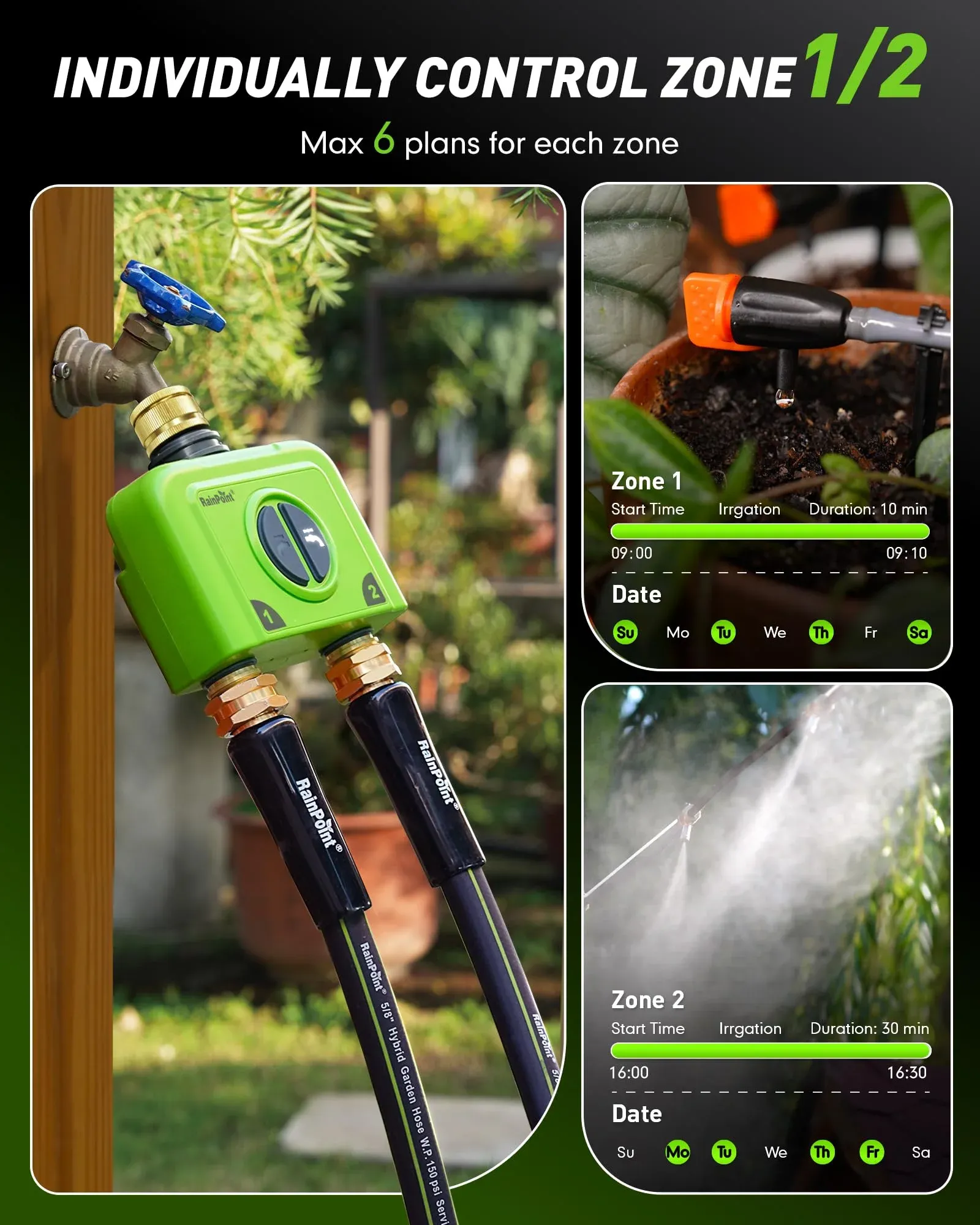
Cover larger areas. A decent sprinkler timer controls pop-up or oscillating heads across lawn zones. You'll need 2.0–3.5 bar pressure for proper coverage. Most UK homes sit around 2.5 bar, so check yours before committing. A two zone water timer lets you run front and back gardens on separate schedules — dead useful if one area gets more sun.
Soaker Hoses
The budget option. Porous hoses weep water along their length. Simple, cheap, but inconsistent coverage. They clog easily with hard water — and if you're in a hard water area (most of England), that's a real consideration.
Micro-Spray Systems
A middle ground between drip and sprinkler. Small spray heads on risers cover 1–3 metre radius each. Good for mixed borders where you've got plants at different heights. I use these along my back wall where the fuchsias and hostas live together — works a treat.
Smart WiFi Timers vs Basic Irrigation Timers: Finding the Best Garden Irrigation System UK Gardeners Trust
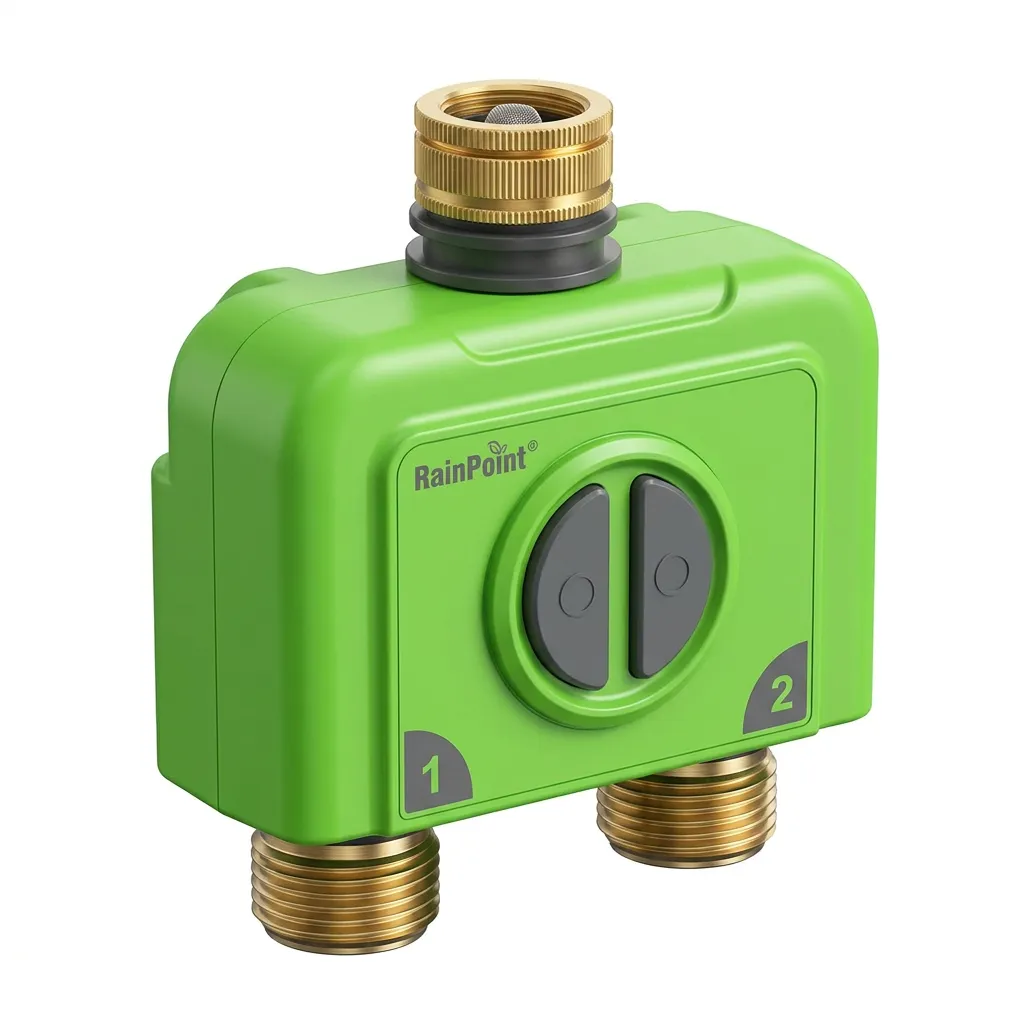
Here's where it gets interesting. A basic garden water timer costs £20–£40 and does one job: opens and closes a valve on a schedule. A wifi water tap timer costs £50–£120 but connects to your phone, checks weather forecasts, and adjusts watering automatically.
So what's the catch? For most small gardens, a basic timer is perfectly adequate. That said, if you travel, manage multiple zones, or just like data, smart systems are worth the premium.
Basic Programmable Timers
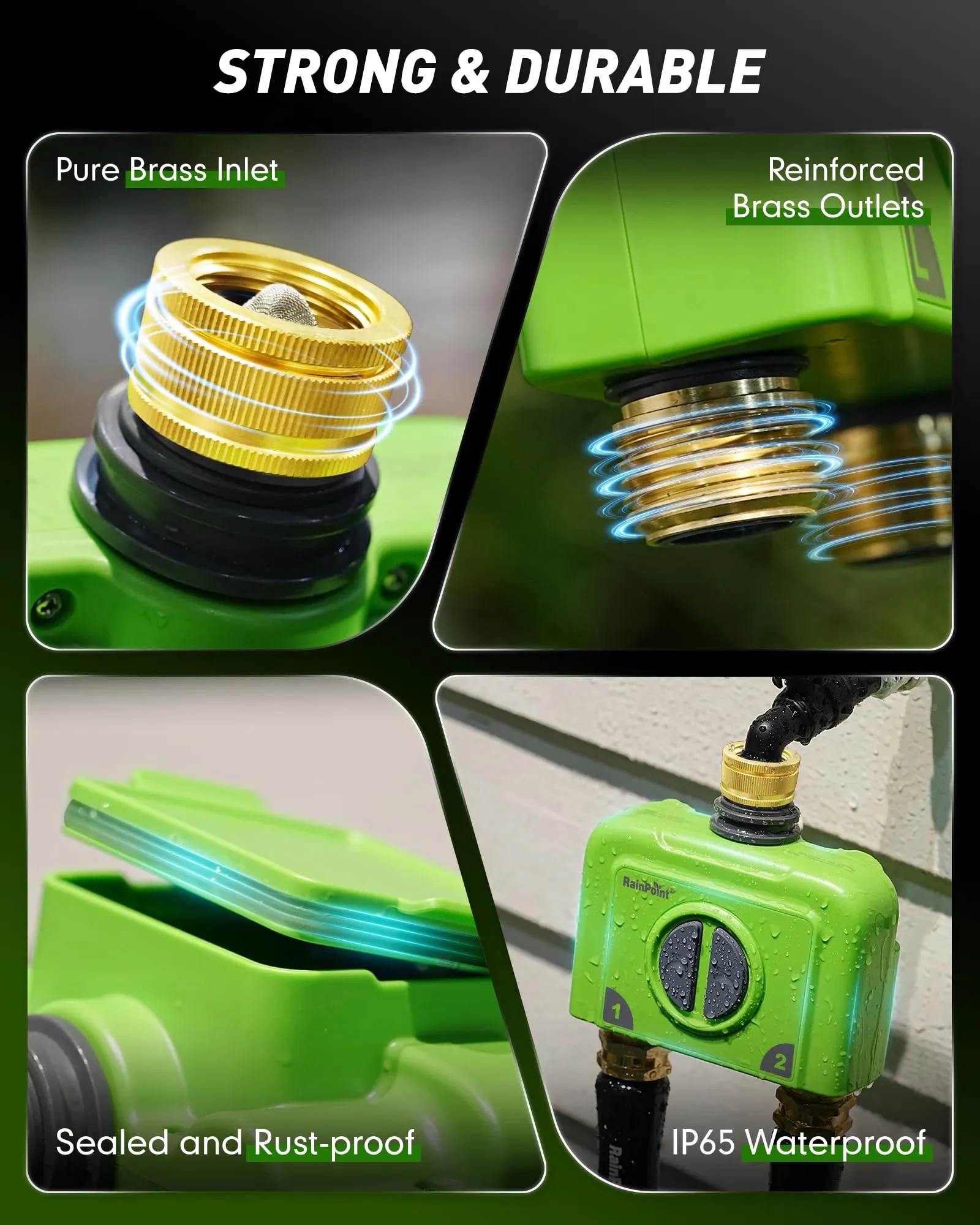
Battery-powered (typically 2x AA lasting 6–12 months). You set start time, duration, and frequency using buttons or a dial. The Rainpoirrig digital water timer is a solid example — weather-resistant housing, programmable scheduling, and it threads straight onto a standard 3/4" BSP garden tap. No wifi needed, no app required. Just set and forget.
WiFi Irrigation Controllers
These connect to your home network and sync with smartphone apps. The best smart water timer for garden use will pull local weather data and skip watering when rain's forecast. Some integrate with Alexa or Google Assistant for voice control. The Rainpoirrig wifi water timer range offers this kind of connectivity with zone-based scheduling.
Honestly, I've tried cheaper wifi timers that lose connection every time the router restarts. Frustrating doesn't cover it. Spend a bit more on something with a reliable RF gateway — the better units use 900MHz sub-GHz radio with 300+ metre range between hub and valve, so even if your wifi drops momentarily, the schedule still runs locally., a favourite among Britain’s tradespeople
Bluetooth vs WiFi — Quick Distinction
Bluetooth timers need you within 10 metres to adjust settings. Fine if you're always home. WiFi timers let you control everything remotely — handy when you're on holiday and Belfast gets an unexpected heatwave. For a proper smart water tap timer experience, wifi wins every time.
How to Choose the Best Garden Irrigation System UK Conditions Demand
Picking the right system isn't just about features. You need to match the hardware to your actual garden conditions.
Water Pressure
Check yours with a £10 pressure gauge from any hardware shop. UK mains typically delivers 1.0–4.0 bar. Below 1.5 bar, stick with drip irrigation. Above 2.0 bar, sprinklers become viable. Most irrigation timers need minimum 0.5 bar to operate the solenoid valve.
Garden Size and Zones
Under 50m²? A single-zone water timer for hosepipe connection handles everything. Between 50–200m²? Consider a two zone water timer to split front/back or lawn/borders. Over 200m²? You're looking at a multi-zone wifi controller with 3–6 independent valve outputs.
Soil Type
Clay soil (common across much of Northern Ireland and central England) holds moisture longer — water less frequently but for longer durations. Sandy soil drains fast — shorter, more frequent cycles work better. My terrace garden soil is heavy clay, so I run 20-minute sessions every 3 days rather than daily short bursts.
UK Regulations to Know
Any irrigation system connected to mains water must comply with Water Supply (Water Fittings) Regulations 1999. That means you need a double-check valve or backflow preventer between your tap and the irrigation system. Most quality garden hose timers include one, but verify before buying. GOV.UK water regulations detail the full requirements for domestic installations.
Frost Protection
This catches people out. UK winters will crack any timer left connected to an outdoor tap below -5°C. Drain your system by October, store timers indoors November through March. The best garden hose timer UK buyers choose will have a quick-disconnect fitting that makes seasonal removal painless.
Installation Tips for UK Homes
You don't need a plumber. Seriously. Most domestic irrigation setups take an afternoon with basic tools.
What You'll Need
A garden tap with 3/4" BSP thread (standard UK fitting), your chosen timer or controller, distribution tubing (13mm main line, 4mm micro-tubing for drip), and appropriate emitters or sprinkler heads. Total cost for a basic 4-zone drip system covering 30m² of borders: £80–£150 including the timer.
Step-by-Step Basics
Thread your timer onto the tap. Connect the main distribution line. Run tubing along your borders, securing with ground stakes every 50cm. Add drip emitters at each plant — 2L/hr for small plants, 4L/hr for shrubs. Test for leaks. Programme your schedule. Done.
One tip from experience: run your tubing under mulch if possible. UV degrades black poly tubing over 3–5 years, but buried under bark chips it'll last a decade. I learned that the hard way after replacing cracked tubing in my second summer.
Connecting a Rainpoint Sprinkler Timer to Multiple Zones
If you're running a sprinkler timer across separate lawn areas, use a manifold splitter after the timer output. Each zone gets its own shut-off valve. The timer opens the main solenoid, then manual ball valves on each zone let you balance flow. For fully automated multi-zone control, a dedicated two zone water timer eliminates the manual valves entirely — each zone gets its own programmed schedule.
Product Comparison: Auto Watering System Options for 2026
Here's how the main categories stack up. I've included typical specs you'll find across the best garden irrigation system UK market this year.
| Feature | Basic Digital Timer | Bluetooth Timer | WiFi Smart Controller | Multi-Zone WiFi System |
|---|---|---|---|---|
| Price Range | £20–£40 | £35–£60 | £55–£100 | £90–£180 |
| Zones | 1 | 1 | 1–2 | 3–6 |
| Remote Control | No | Within 10m | Anywhere via app | Anywhere via app |
| Weather Integration | No | No | Yes — rain skip | Yes — full forecast |
| Voice Assistant | No | No | Alexa/Google | Alexa/Google |
| Battery Life | 6–12 months | 4–8 months | 6–10 months | Mains/solar hybrid |
| Min. Pressure | 0.5 bar | 0.5 bar | 0.5 bar | 1.0 bar |
| Best For | Small gardens, single tap | Tech-curious, single zone | Medium gardens, holidays | Large gardens, multiple areas |
Is the extra spend on wifi worth it? If you travel more than a week at a time during growing season — absolutely yes. If you're always home and have a simple setup, a basic automatic garden watering timer does the job spot on., meeting British quality expectations
Frequently Asked Questions
What is the best garden irrigation system for UK weather?
A wifi irrigation controller paired with drip tubing handles UK weather best because it automatically skips watering during rain. Systems operating at 0.5–4.0 bar suit standard UK mains pressure. For gardens under 50m², a single-zone programmable water timer at £25–£40 provides reliable automated watering without complexity. Larger gardens benefit from multi-zone smart controllers at £90–£180.
How do I connect an irrigation timer to a UK garden tap?
UK garden taps use standard 3/4" BSP thread. Your irrigation timer screws directly onto this fitting — no adapters needed in most cases. Ensure you fit a backflow preventer between tap and timer to comply with UK Water Fittings Regulations 1999. The connection takes under 2 minutes with hand-tightening plus a quarter-turn with pliers.
Can I use a wifi water timer with low water pressure?
Yes. Most wifi water tap timers operate from 0.5 bar minimum, which covers nearly all UK mains supplies. If your pressure drops below 1.0 bar, pair the timer with drip irrigation rather than sprinklers. Drip systems work effectively at 1.0–1.5 bar, while sprinklers typically need 2.0+ bar for proper coverage radius of 3–5 metres.
How often should I water my lawn with an automatic system in the UK?
During UK summer months (June–August), established lawns need 25mm of water per week. Programme your sprinkler timer for 2–3 sessions of 15–20 minutes each, ideally between 5am–7am when evaporation is lowest. Clay soils need fewer, longer sessions; sandy soils benefit from shorter, more frequent watering. Reduce to once weekly in spring and autumn.
Do I need to winterise my garden irrigation system?
Absolutely. UK frost will damage any timer or tubing left connected below -5°C. Disconnect and drain your system by late October. Store electronic timers indoors — batteries corrode in freezing conditions. Buried drip tubing can stay in place if drained, but above-ground components must come inside. Spring reconnection takes 10–15 minutes.
What's the difference between a rainpoint water timer and a basic mechanical timer?
A digital rainpoint water timer offers programmable scheduling with 1-minute precision, multiple daily start times, and duration settings from 1–240 minutes. Mechanical timers use a wind-up dial with only countdown functionality — no repeat scheduling. Digital timers cost £5–£15 more but provide consistent automated watering across weeks without manual resetting each day.
Key Takeaways
- Match system to garden size: Single-zone timers suit gardens under 50m²; multi-zone wifi controllers handle 200m²+ with independent scheduling per area.
- Check water pressure first: Measure your tap output before buying — drip systems work at 0.5+ bar, sprinklers need 2.0+ bar for proper coverage.
- WiFi timers save water and money: Weather-responsive smart controllers reduce consumption by up to 47% compared to fixed-schedule basic timers.
- UK regulations matter: Always fit a backflow preventer between tap and timer to comply with Water Supply Regulations 1999.
- Winterise every year: Disconnect, drain, and store all components indoors by October to prevent frost damage below -5°C.
- Budget realistically: A complete single-zone drip system including timer costs £80–£150; multi-zone smart setups run £150–£300 fully installed.
- Morning watering wins: Schedule between 5am–7am for minimum evaporation loss — this alone improves efficiency by 20–30% versus evening watering.
Picking Your System: Practical Advice for 2026
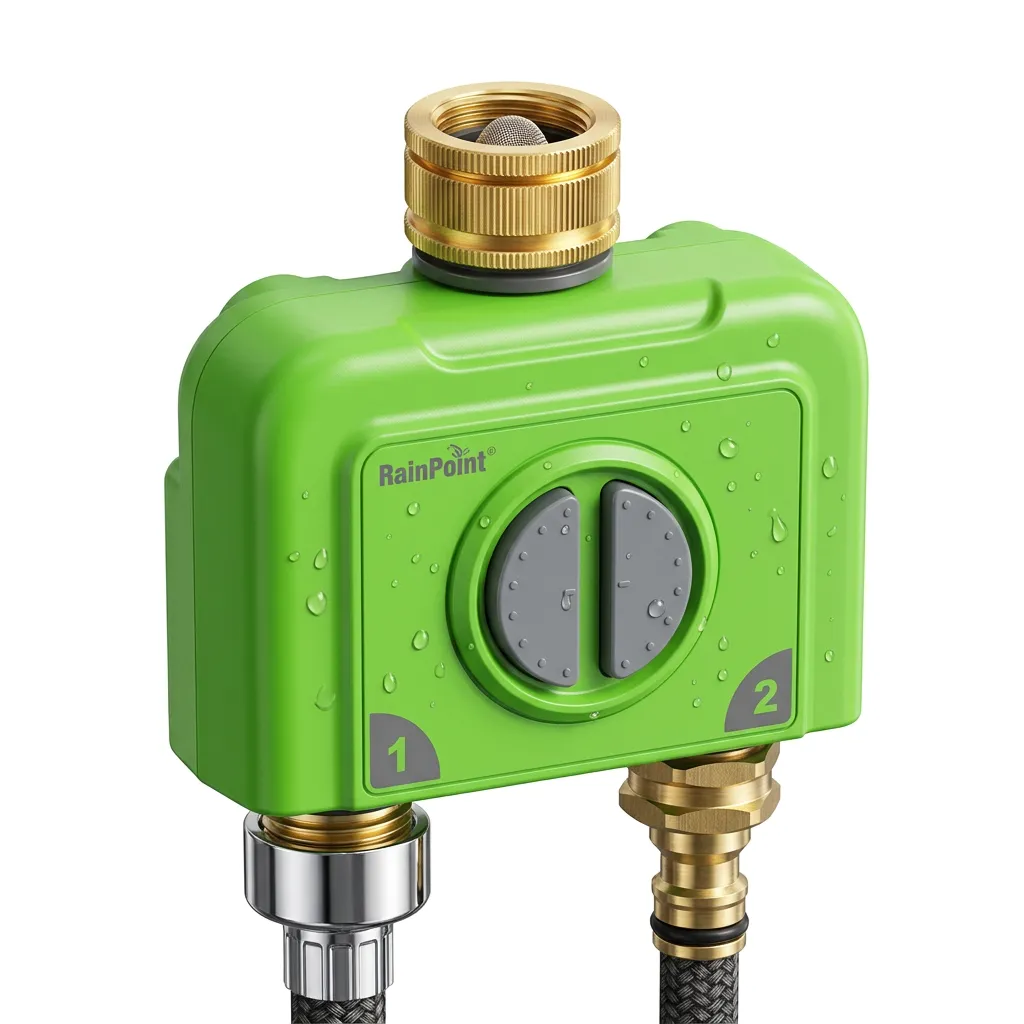
Look, the best garden irrigation system UK gardens need isn't necessarily the most expensive one. It's the one that matches your actual situation. Got a small terrace like mine? A basic Rainpoirrig programmable timer and 20 metres of drip tubing will sort you out for under £100.
Managing a larger property with multiple zones, or you're away regularly? That's where a wifi irrigation controller earns its keep. Checking your system from your phone, adjusting schedules based on weather, getting alerts if something fails — that's genuine peace of mind, not a gimmick.
My mate down the road has a 150m² lawn and swears by his two zone water timer setup — front lawn on early morning, back borders on alternate evenings. His water bill dropped £40 last summer compared to hand-watering. That said, he's more disciplined about maintenance than most. These systems need a 10-minute check monthly during growing season: clear any blocked emitters, check battery levels, verify connections aren't leaking.
Whatever you choose, start simple. You can always upgrade from a basic irrigation timer to a smart system later — the tubing and emitters stay the same, you're just swapping the controller at the tap end. That's decent design, and it's why I'd recommend investing in quality distribution components from day one even if you start with a budget timer. (Skimping on the tubing is a false economy — ask me how I know.)
The BSI standards for garden products provide useful benchmarks for durability and safety if you want to verify a product's quality claims before purchasing.
This spring's been dry across much of the UK already. If you've been thinking about automating your watering, now's the time. Prices are competitive, the technology's matured, and your garden will thank you for the consistency. Get it fitted this weekend and you won't look back.
Ready to try Rainpo Irrig?
Shop Now — £94.61