Free UK Mainland Delivery on All Orders Over £50

By Daniel Zhao2026-05-075 min read

The Ultimate Guide to Choosing and Installing a Home Irrigation System for Your UK Garden in 2026

A practical, no-nonsense guide to picking the right home irrigation system for British gardens — covering smart timers, water efficiency during hosepipe bans, and setup tips tailored to our unpredictable UK climate.

Why UK Gardens Actually Need Irrigation

Vibrant garden flowers being watered by an automated system.

Here's the thing most people get wrong: they assume British rainfall handles everything. It doesn't. Despite averaging 1,154mm of rainfall annually across the UK, the distribution is wildly uneven. My terrace garden here in East Belfast barely saw rain for three solid weeks last July. The lawn went crispy. Sound familiar?

A well-designed home irrigation system isn't a luxury — it's a practical solution for anyone who's tired of dragging hoses around or coming home from holiday to find their borders looking like the Sahara. The summers of 2023, 2024, and now 2025 have shown us that dry spells are becoming more frequent, even in Northern Ireland where we're supposed to get plenty of rain.

The RHS reports that UK gardens lose up to 24 litres per square metre per week through evapotranspiration during peak summer. That's a lot of water your plants need replacing. And if you're hand-watering? You're probably using 30-50% more water than an automated garden watering system would.

The Real Cost of Not Automating

I tracked my water usage last summer. Honestly, the numbers surprised me. Hand-watering my modest 40m² plot used roughly 1,200 litres per month. After switching to drip irrigation with a programmable water timer, that dropped to about 720 litres. A 40% reduction. That's real money off the meter.

Types of Home Irrigation Systems Explained

Close-up of a residential garden irrigation setup.

Not all watering setups are created equal. The right choice depends on your garden size, plant types, and how much you want to spend. Here's a breakdown of the main options.

Drip Irrigation

Drip systems deliver water directly to plant roots through small emitters at rates of 2-8 litres per hour. They're brilliant for borders, raised beds, and container gardens. Water waste? Minimal. I've been running one along my back fence for two seasons now and the difference in plant health is obvious.

Typical cost: £40-£120 for a basic starter kit covering 15-20 plants.

Sprinkler Systems

Pop-up and rotary sprinklers cover larger areas — lawns mainly. A decent sprinkler head covers 3-10 metres radius depending on water pressure. They use more water than drip systems, but for lawns there's really no practical alternative. Pair them with a sprinkler timer and you're sorted.

Soaker Hoses

The budget option. Porous rubber hoses that weep water along their length. Dead simple to install. They work, but they're not precise — flow rates vary along the length, and they tend to degrade after 2-3 seasons. Good for hedgerows and established borders where exact coverage doesn't matter much.

Micro-Spray Systems

Think of these as a middle ground. Micro-sprayers produce a fine mist covering 0.5-2 metre radius each. Ideal for greenhouse staging, seed trays, and dense planting schemes. They do lose some water to wind drift though — worth bearing in mind if your plot's exposed.

Smart Timers and Automation: What's Actually Worth Buying

Smart garden timer controlling the watering schedule for maximum efficiency.

This is where things get interesting. A garden water timer transforms any manual setup into an automated watering system. But the range on the market in 2026 is massive — from £15 mechanical dials to £80+ WiFi-connected controllers. So what's the catch?

Basic Digital Timers

A solid programmable water timer lets you set watering schedules — typically up to 16 programmes per day, with durations from 1 minute to 4 hours. They run on 2× AA batteries lasting roughly 6-12 months. For most small-to-medium gardens, this is genuinely all you need. The Rainpoirrig range includes weather-resistant digital timers that handle British conditions without fuss.

WiFi and Smart Water Timers

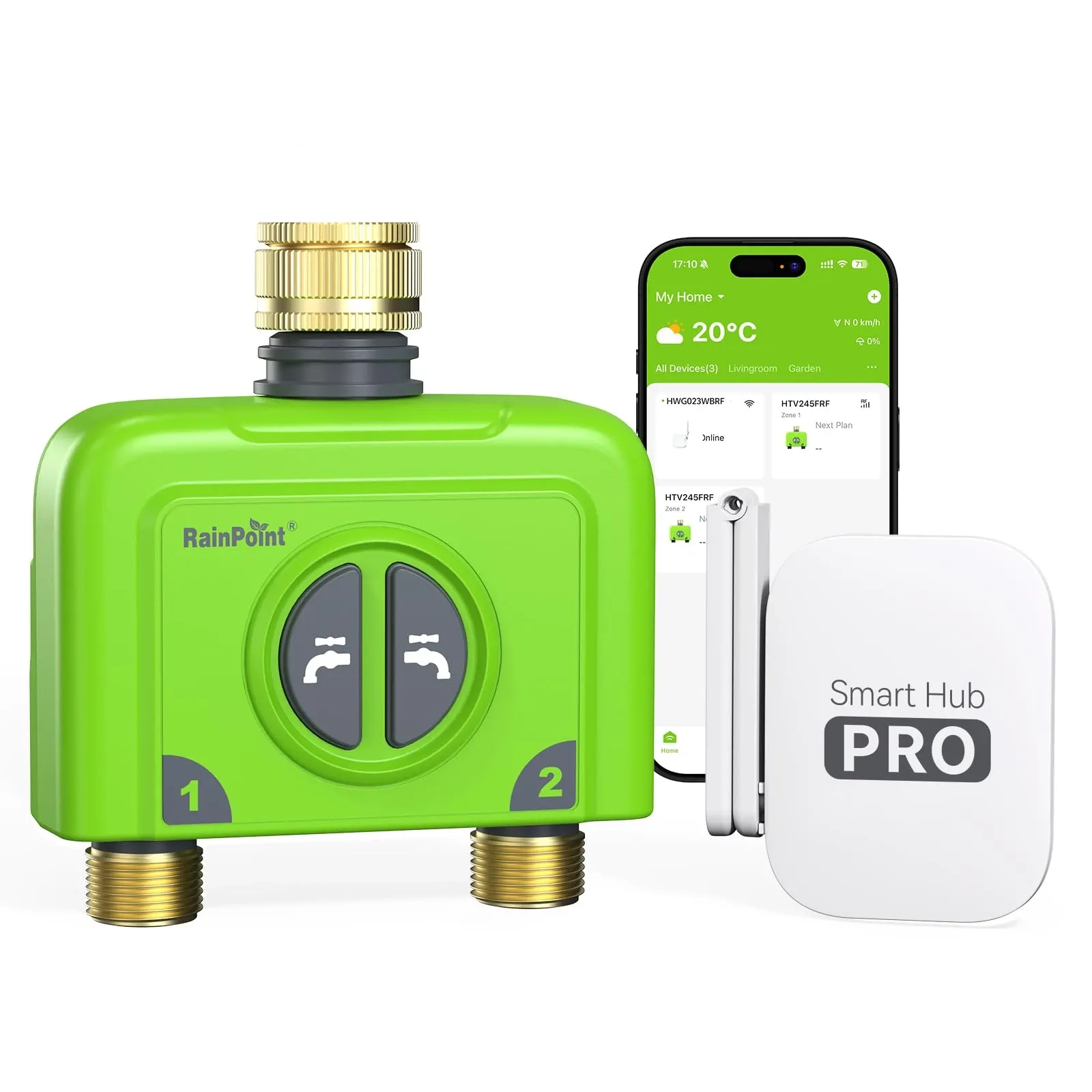
Want to adjust watering from your phone while you're at work? A wifi water tap timer connects to your home network and gives you remote control via an app. The best models integrate with Alexa and Google Assistant too. If you travel frequently or just want that extra convenience, it's worth looking at the best wifi water timer options.

The best smart water timer for garden use will also factor in local weather data. Some pull forecasts automatically and skip watering if rain's expected. That's not a gimmick — it genuinely saves water. My mate in Bangor swears by his smart setup. Runs two zones, adjusts for rainfall, and he barely thinks about it.

Two-Zone and Multi-Zone Controllers

Got a lawn AND flower beds? You need different watering schedules for each. A two zone water timer runs independent programmes — perhaps 15 minutes of sprinkler for the lawn at 6am, then 45 minutes of drip irrigation for the borders at 7am. Larger gardens might need 3-zone or even 6-zone controllers with RF gateways covering up to 300 metres range.

Key specification to check: Flow rate compatibility. Most UK garden taps deliver 10-15 litres per minute at around 2-3 bar pressure. Make sure your timer and system components match this range. Too many emitters on one line and you'll get pathetic dribbles at the far end.

Hosepipe Bans and Water Efficiency: What UK Law Actually Says

Efficient garden watering solution designed to save water during hosepipe bans.

Hosepipe bans have hit parts of England in 5 of the last 10 years. And here's what most people don't realise: drip irrigation systems connected to a mains tap are typically exempt from hosepipe ban restrictions, provided they use a timer and aren't wasteful. The exact rules vary by water company, so always check — GOV.UK's Water Industry Act guidance covers the legal framework.

That said, exemptions aren't guaranteed. Some water companies specifically exclude micro-irrigation from restrictions; others don't. The safest bet? Install a rainwater harvesting system alongside your automated setup. A 200-litre water butt costs about £30-£50 and can supply a small drip system for roughly a week during dry spells. (Ours has paid for itself several times over — and it's satisfying to use rain against itself, so to speak.)

Maximising Every Drop

Water efficiency isn't just about bans. It's about your bill. Here are the numbers that matter:

  • Drip irrigation uses 30-50% less water than sprinklers for the same planted area
  • Watering before 8am reduces evaporation losses by up to 25%
  • Mulching around drip emitters cuts soil moisture loss by another 20-30%
  • A watering timer for garden tap eliminates the classic "left the hose on" disaster — which wastes an average of 540 litres per forgotten session

Which? has a decent guide on efficient garden watering that covers some of these points, though their product recommendations tend to skew toward the pricier end.

Planning Your Home Irrigation System Layout

Don't just buy kit and start connecting things. Spend 30 minutes planning first. It'll save you hours of frustration and wasted fittings.

Step 1: Map Your Garden Zones

Walk your plot with a tape measure. Sketch it out — doesn't need to be architectural quality. Mark these zones separately:, a favourite among Britain’s tradespeople

  • Lawn areas — sprinkler coverage needed
  • Borders and beds — drip line or micro-spray
  • Containers and pots — individual drip emitters
  • Greenhouse/polytunnel — micro-spray or misting

Step 2: Check Your Water Pressure

This trips up so many people. Grab a pressure gauge (about £8 from any hardware shop) and test your outdoor tap. UK mains pressure typically runs 1-3 bar, but older properties or those at the end of supply lines can be lower. You need a minimum of 1.5 bar for most irrigation systems to work properly.

Well, actually — some drip systems work fine at 1 bar with a pressure regulator. But sprinklers? They need at least 2 bar to get decent coverage.

Step 3: Calculate Your Run Lengths

Standard 13mm supply pipe can feed drip emitters over runs of up to 30 metres before pressure drop becomes an issue. For longer runs, step up to 19mm or 25mm pipe. Keep individual drip lines under 15 metres with no more than 20 emitters per line at 2 litres/hour each.

Step-by-Step Installation Guide for Your Garden Watering System

Right, let's get practical. I installed my own setup over a single Saturday afternoon. Here's exactly how.

What You'll Need

  • Outdoor tap connector (¾" BSP thread — standard UK fitting)
  • An irrigation timer or automatic garden watering timer
  • Pressure regulator (if running drip irrigation)
  • 13mm main supply line — buy 10-15% more than your measured length
  • 4mm micro-tubing for individual plant feeds
  • Drip emitters, micro-sprayers, or sprinkler heads
  • T-connectors, elbows, end caps
  • Pipe pegs/stakes

Installation Steps

1. Fit the timer to your tap. Hand-tight plus a quarter turn with pliers. Use a rubber washer — always. Leaky connections here waste litres daily.

2. Run your main supply line. Lay 13mm pipe along your planned route. Use pipe pegs every 60-80cm to hold it in place. Leave it in the sun for 20 minutes first — it softens and becomes much easier to work with.

3. Install branch connections. Cut into the main line with sharp scissors (not a knife — you'll get a ragged cut). Push-fit T-connectors work fine for most domestic setups. No tools required.

4. Add emitters or sprinkler heads. For drip systems, punch holes in the 13mm pipe using a proper hole punch tool (about £3) and insert 4mm barbed connectors. Run micro-tubing to each plant and fit adjustable drip emitters.

5. Programme your timer. Start conservative. For established plants in loam soil, try 15 minutes every other day during summer. Sandy soil? More frequent but shorter — 10 minutes daily. Clay? Less often — 20 minutes every 3 days. Adjust from there.

6. Test and adjust. Run each zone manually. Check for leaks, blocked emitters, and dry spots. I found two emitters clogged straight out of the packet on my first install. Worth checking.

Pro tip from my own experience: Bury your main supply lines 5-10cm deep under mulch or just below soil surface. It looks tidier, protects the pipe from UV degradation, and stops you tripping over them. Just mark the routes so you don't slice through them with a spade later. (Ask me how I know.)

Timer Comparison: Budget vs Smart vs WiFi

Choosing the right garden water timer depends on your budget, garden complexity, and how hands-on you want to be. Here's how the main categories stack up as of spring 2026:

Feature Basic Mechanical Timer Digital Programmable Timer WiFi Smart Timer
Price Range £8–£15 £20–£40 £45–£85
Programmes 1 (manual dial) Up to 16/day Unlimited via app
Zones 1 1–2 1–3 (expandable)
Remote Control No No Yes — phone/voice
Weather Integration No Rain delay (some models) Auto rain skip
Battery Life N/A (manual wind) 6–12 months (2× AA) 4–8 months (4× AA)
Smart Home Compatible No No Alexa & Google Assistant
Best For Occasional use Small-medium gardens Larger gardens, frequent travellers
Water Saving vs Manual ~10% ~30% Up to 50%

Look, I know the price jump from basic to WiFi seems steep. But if you're paying a metered water bill and have any kind of decent-sized garden, a rainpoint sprinkler timer or equivalent smart unit pays for itself within a single season through water savings alone. Worth the extra spend? For most people, yes.

The best garden hose timer UK buyers tend to choose sits in that digital programmable sweet spot — enough features to automate properly without the complexity of WiFi setup. But if you're already running a smart home with Alexa or Google, adding a smart water tap timer to the ecosystem makes total sense.

Frequently Asked Questions

Can I use a home irrigation system during a hosepipe ban?

In most cases, yes — drip irrigation systems with a timer are typically exempt from hosepipe ban restrictions under UK water company rules. Sprinkler systems, though, are usually banned during restrictions. Always check your specific water company's Temporary Use Ban conditions, as rules vary. Systems using stored rainwater are generally unrestricted regardless.

What water pressure do I need for a garden irrigation system?

Most drip irrigation systems work effectively at 1.0–1.5 bar minimum pressure. Sprinkler systems need at least 2.0 bar for proper coverage. Standard UK mains pressure ranges from 1–3 bar. Test yours with a £8 pressure gauge from any hardware shop before buying components, as low-pressure properties may need a booster pump costing £60–£150.

How much does a home irrigation system cost to install in the UK?

A DIY drip irrigation setup for a small garden (under 50m²) costs £60–£150 including a digital timer. Medium gardens with mixed sprinkler and drip zones run £150–£350. Professional installation for larger gardens typically costs £500–£1,500 depending on complexity. A basic garden water timer adds £20–£85 depending on whether you choose manual, digital, or WiFi-enabled.

Do I need to winterise my irrigation system in the UK?

Yes, absolutely. UK frost can damage pipes and fittings from November through March. Drain all lines by opening end caps and disconnecting from the tap. Remove your irrigation timer and store it indoors — batteries corrode in freezing temperatures. Blow-through with a compressor at 2 bar maximum clears residual water from drip emitters. This 30-minute autumn job prevents expensive spring replacements.

What's the best time to water a garden with an automatic system?

Early morning between 5am and 8am is optimal. Soil absorbs water before the day's heat causes evaporation, reducing water loss by up to 25% compared to midday watering. Evening watering (after 7pm) is the second-best option, though prolonged leaf wetness overnight can encourage fungal diseases like powdery mildew. Programme your watering timer accordingly.

Can a WiFi water timer work with Alexa or Google Home?

Yes — most modern WiFi irrigation controllers support both Alexa and Google Assistant voice control. You can start, stop, or adjust watering with voice commands. The best wifi water timer models also integrate weather data to auto-skip watering when rain is forecast, potentially saving 20–35% on water usage compared to fixed-schedule timers. Setup typically takes under 10 minutes via the manufacturer's app.

Key Takeaways

  • A home irrigation system saves 30-50% water compared to hand-watering, paying for itself within one season on metered supplies.
  • Drip irrigation is typically exempt from UK hosepipe bans when used with a timer — but always verify with your water company first.
  • Check your water pressure before buying — you need minimum 1.5 bar for drip and 2.0 bar for sprinklers. A £8 gauge prevents expensive mistakes.
  • WiFi smart timers with weather integration offer the best water savings (up to 50%) and convenience, especially for multi-zone gardens.
  • Water between 5am and 8am for maximum absorption and minimum evaporation — an automatic garden watering timer makes this effortless.
  • Winterise every autumn — drain lines, remove timers, and blow through with compressed air to prevent frost damage.
  • Plan before you buy — 30 minutes mapping zones and measuring runs saves hours of rework and wasted fittings.

Ready to try Rainpo Irrig?

Shop Now — £108.36