Water Butt Irrigation System UK: Rainwater Guide
Quick answer: A water butt irrigation system in the UK lets you water borders and pots with stored rainwater during a hosepipe ban, because rainwater is not drawn from the mains: raise the butt for pressure, add a filter and a pressure-compensating drip line, and fit a timer for hands-off watering.
During a hosepipe ban, the water butt in the corner suddenly looks like the smartest thing in the garden. A water butt irrigation system in the UK uses stored rainwater — which is not mains water, so it is generally not restricted by a ban — to keep borders, pots and the veg patch going through the driest weeks.
Why rainwater, and why now
A typical 200-litre butt fills after one good downpour, enough to drip-feed a row of tomatoes for a couple of weeks. Because it does not draw on the mains, a Temporary Use Ban does not stop you using it, and the Environment Agency actively encourages rainwater harvesting, especially in the drier South East.
The pressure problem, solved
The honest catch is pressure. Gravity from a butt sitting on the ground rarely exceeds about 0.1 bar — fine for a short soaker hose, not enough for a long multi-zone drip run. Two fixes work:
- Raise the butt on a sturdy stand (aim for at least 60cm of head) to boost gravity feed.
- Add a small pump if you need to drive a proper drip line at steady pressure.
What you need
- An elevated butt or a pump for pressure.
- A filter to keep debris out of the drippers.
- A pressure-compensating drip kit suited to low pressure.
- A timer that opens reliably at low pressure so watering is hands-off.
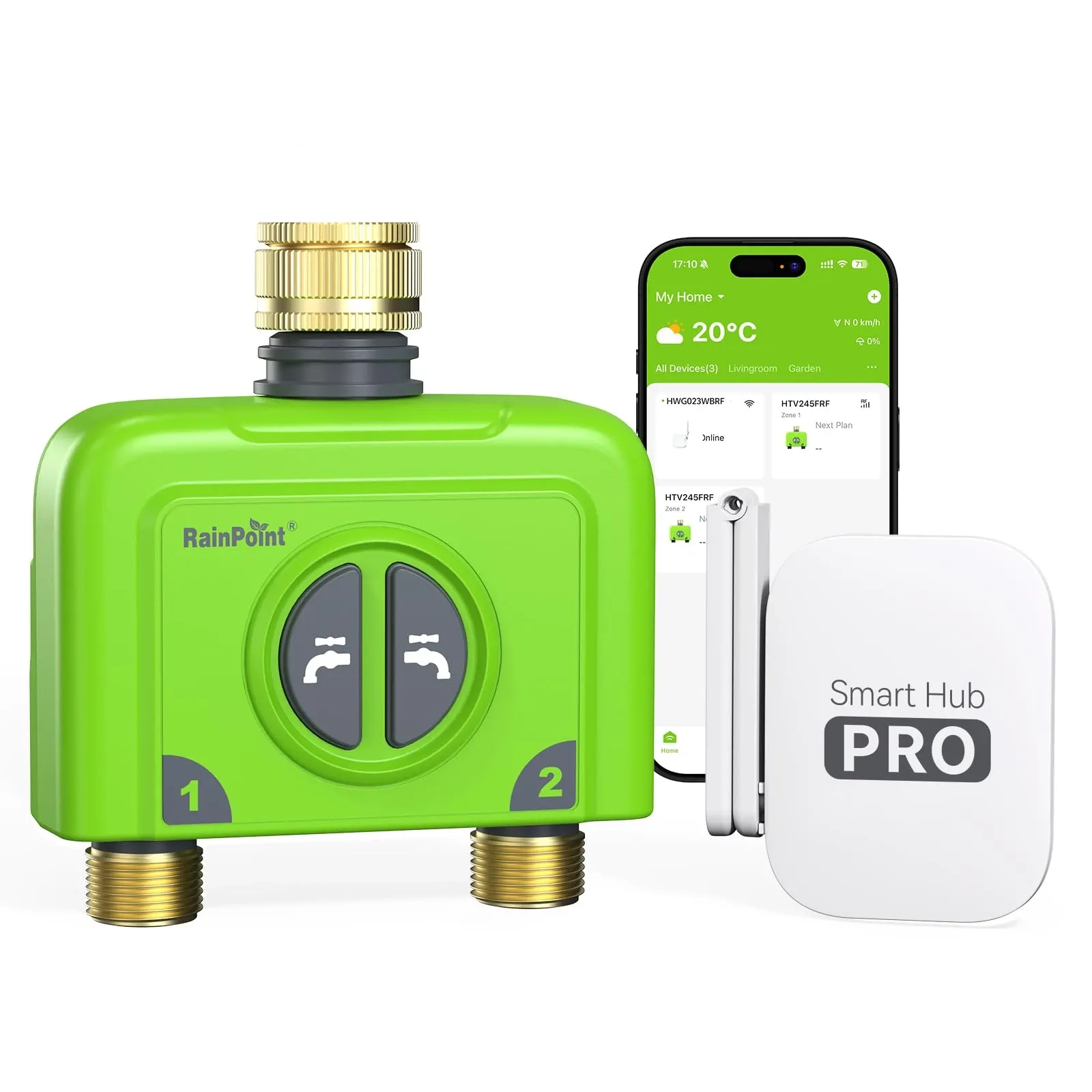
Where a butt gives enough pressure, a compatible battery tap timer can automate the watering. The HTV245 series is stated for 0.5–8 bar, so many gravity-fed water-butt setups will be below its minimum; measure pressure and confirm the connector before attempting this use.
Automate mains watering and keep the butt for rainwater soaker runs:
Shop the HTV245-Series 2-Zone Controller — £72.99Two independent outlets · 0.5–8 bar · 3–50°C · 12-month retailer warranty
Frequently asked questions
Can I use a water butt during a hosepipe ban?
Yes. A water butt stores rainwater, which is not mains water, so a hosepipe ban generally does not restrict using it. It is one of the best ways to keep watering during a Temporary Use Ban.
Does a water butt have enough pressure for drip irrigation?
A butt on the ground gives very low pressure, around 0.1 bar, which suits a short soaker hose but not a long drip run. Raise the butt at least 60cm or add a small pump for a proper drip system.
Do I need a filter on a water butt irrigation system?
Yes. Rainwater carries debris that can block drippers, so a filter between the butt and the drip line keeps the emitters clear and the flow even.
Can I put a timer on a water butt?
Yes, if the butt gives enough pressure for the timer to open reliably. Otherwise keep the timer on the mains tap for the main garden and use the butt for gravity-fed soaker hose runs.