Drip Irrigation Kit UK: Greenhouse and Veg Bed Guide
Quick answer: A drip irrigation kit for UK gardens delivers water straight to the roots, which is ideal for a greenhouse of tomatoes that split when watering is uneven: choose 13mm tubing, pressure-compensating drippers, a BSP tap connector and a timer so the crop gets small, steady amounts daily.
If your tomatoes split their skins or get the sunken patch of blossom end rot, the culprit is usually inconsistent watering — a dry spell followed by a flood. A drip irrigation kit in a UK greenhouse fixes that by giving each plant a small, steady amount every day, whether or not you are home to do the rounds.
Why drip beats hand-watering under glass
A greenhouse in June and July can need watering once or twice a day, and grow bags are unforgiving: let the compost dry right out and it is very hard to re-wet evenly. Drip lines keep moisture steady at the roots, which is what prevents the feast-and-famine swings that crack fruit. It is also the approach the RHS recommends for even watering of thirsty crops.
What to put in the kit
- 13mm supply tubing run along the staging or grow bags.
- Pressure-compensating drippers so the first and last plant get the same amount — important on a low-pressure garden tap.
- A BSP tap connector to fit a standard UK outdoor tap (typically 1.5–4 bar mains pressure).
- A timer with rain delay to run the line automatically each morning.
- UV-stabilised fittings so cheap connectors do not leak or perish in a season.
Two zones for greenhouse plus outside
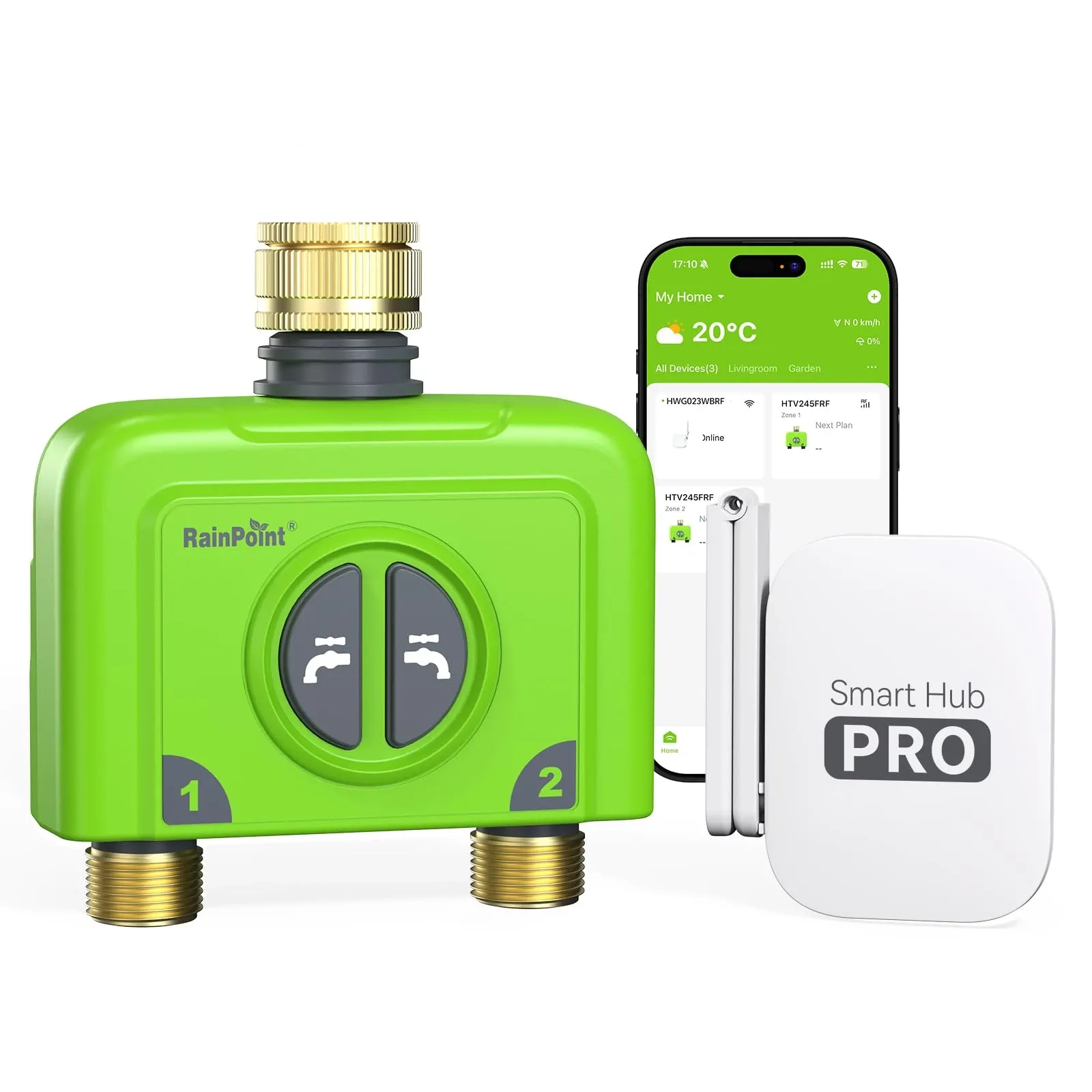
If you also water borders or hanging baskets, a two-zone timer can separate the greenhouse line from outdoor watering. The HTV245-series controller has two independently controlled outlets. Confirm its inlet connector and compatibility with the planned drip components before installation.
Setting it for tomatoes
Start with a short run early each morning and watch the plants and compost for a few days — steady moisture, not sodden. In a heatwave add a second short cycle rather than one long flood. Consistency is the whole point.
Run a greenhouse drip line and the garden from one two-zone tap timer:
Shop the HTV245-Series 2-Zone Controller — £72.99Two independent outlets · 0.5–8 bar · 3–50°C · 12-month retailer warranty
Frequently asked questions
Is a drip irrigation kit good for greenhouse tomatoes?
Yes. Drip irrigation gives tomatoes small, steady amounts of water at the roots, which helps prevent the splitting and blossom end rot caused by swinging between dry and flooded compost.
What size tubing does a UK drip irrigation kit use?
Most UK kits use 13mm supply tubing with smaller feeder line to each dripper. Pressure-compensating drippers help every plant get the same amount on a normal garden tap.
Will a drip kit work on low mains pressure?
Usually yes, within limits. UK mains is typically 1.5 to 4 bar. Pressure-compensating drippers even out the flow, but if it weakens at the far end, shorten the run or split it across two zones.
Can I run a greenhouse and the garden from one timer?
Yes, with a two-zone timer. Run the greenhouse drip line on one outlet and outdoor watering on the other, each on its own schedule, from a single tap.