How to Test Outdoor Tap Flow Rate Before Planning Irrigation
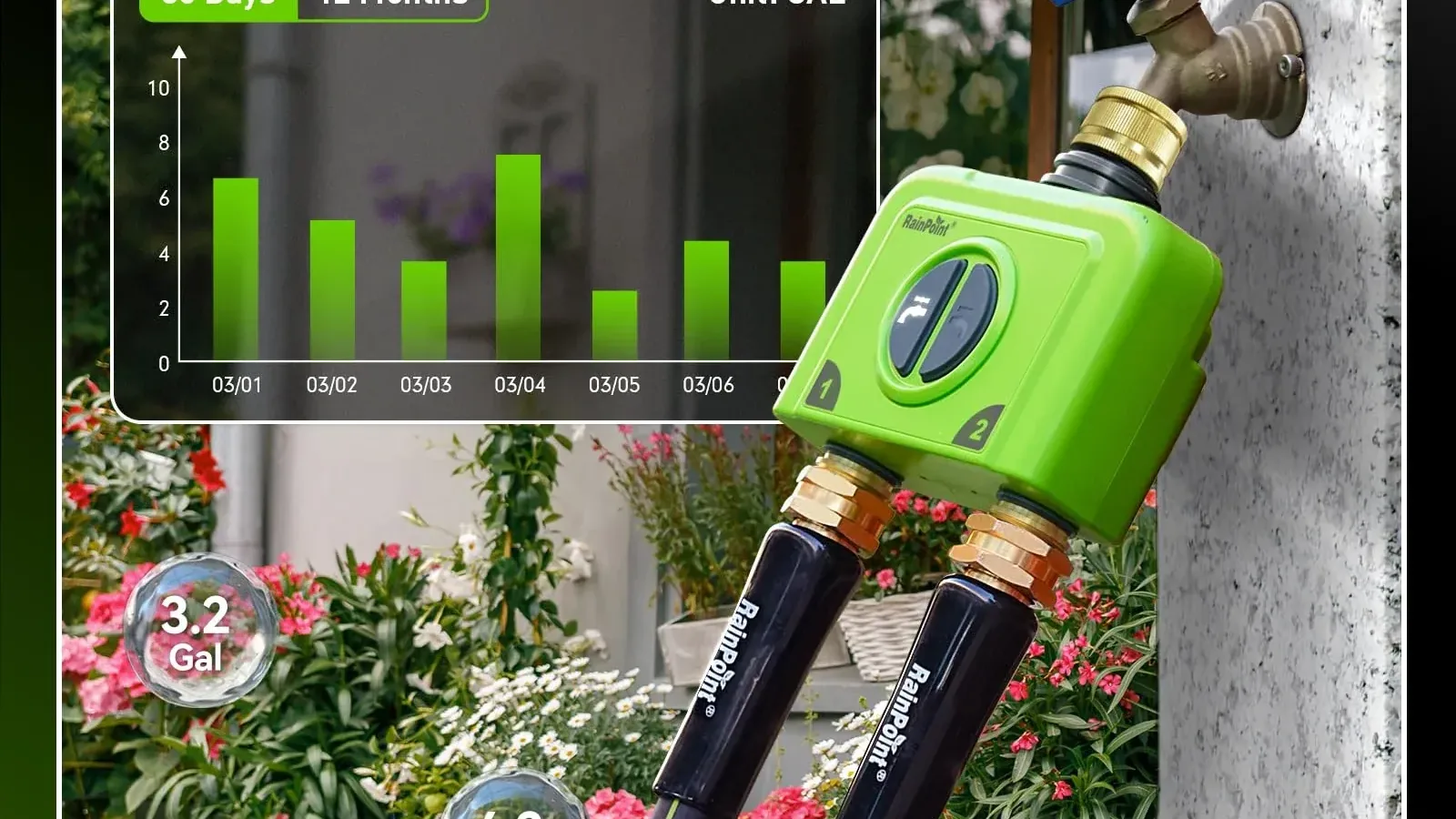
Short answer: Test an outdoor tap's flow rate by timing how long it takes to fill a container of known volume, then convert the result to litres per minute. Repeat the test and record the lowest representative result. This gives a planning figure for available flow, not a pressure reading, product-capacity guarantee or proof that a particular controller and irrigation kit are compatible.
A five-minute test can prevent an expensive layout mistake. Garden plans often begin with the number of beds, pots or emitters, but the supply has to come first. A tap that fills a watering can quickly may still behave differently when household demand changes, while a high static pressure reading does not tell you how much water reaches the garden during operation. Measure volume over time, keep the conditions consistent and use the result as one input to the design.
What you need for a useful flow test
- A container with a reliable marked volume, such as 5 or 10 litres.
- A stopwatch or phone timer.
- A level place where spills will not create a slipping hazard.
- A note sheet for time, volume and household conditions.
- The ability to turn the outside tap off promptly.
Remove downstream irrigation equipment for the basic tap test only if it can be disconnected safely with the water isolated. Do not disturb fixed plumbing or an unidentified backflow device. If the outside tap leaks, moves at the wall or cannot shut off, pause the test and arrange repair rather than treating the defect as a low-flow result.
Run the timed-container test
- Choose the test volume. A larger known volume usually reduces the effect of reaction-time error, but use a container you can handle safely when full.
- Place the container before opening the tap. Avoid holding it in a way that twists the hose or puts weight on the tap.
- Open the tap to the intended normal position. Start timing as water enters the empty container and stop when it reaches the known mark.
- Record seconds, not an estimate. Empty the container safely and repeat the test at least twice more under the same conditions.
- Repeat under realistic demand. If irrigation will run while the household is active, make a separate observation at a representative time. Do not deliberately run wasteful appliances just to depress the result.
The formula is straightforward:
Flow in litres per minute = container litres ÷ fill time in seconds × 60.
| Container | Fill time | Calculation | Measured flow |
|---|---|---|---|
| 10 litres | 30 seconds | 10 ÷ 30 × 60 | 20 litres per minute |
| 10 litres | 40 seconds | 10 ÷ 40 × 60 | 15 litres per minute |
| 5 litres | 25 seconds | 5 ÷ 25 × 60 | 12 litres per minute |
These are arithmetic examples, not expected UK tap outputs. Your recorded value belongs to your tap at the time and under the conditions tested.
Use repeat tests rather than the most flattering number
Suppose three 10-litre tests take 31, 33 and 39 seconds. The variation matters. Check whether the tap position changed, another outlet was used, the hose kinked or the container mark was read differently. If no simple reason explains the difference, use the lower representative flow for cautious planning and keep the full set of readings.
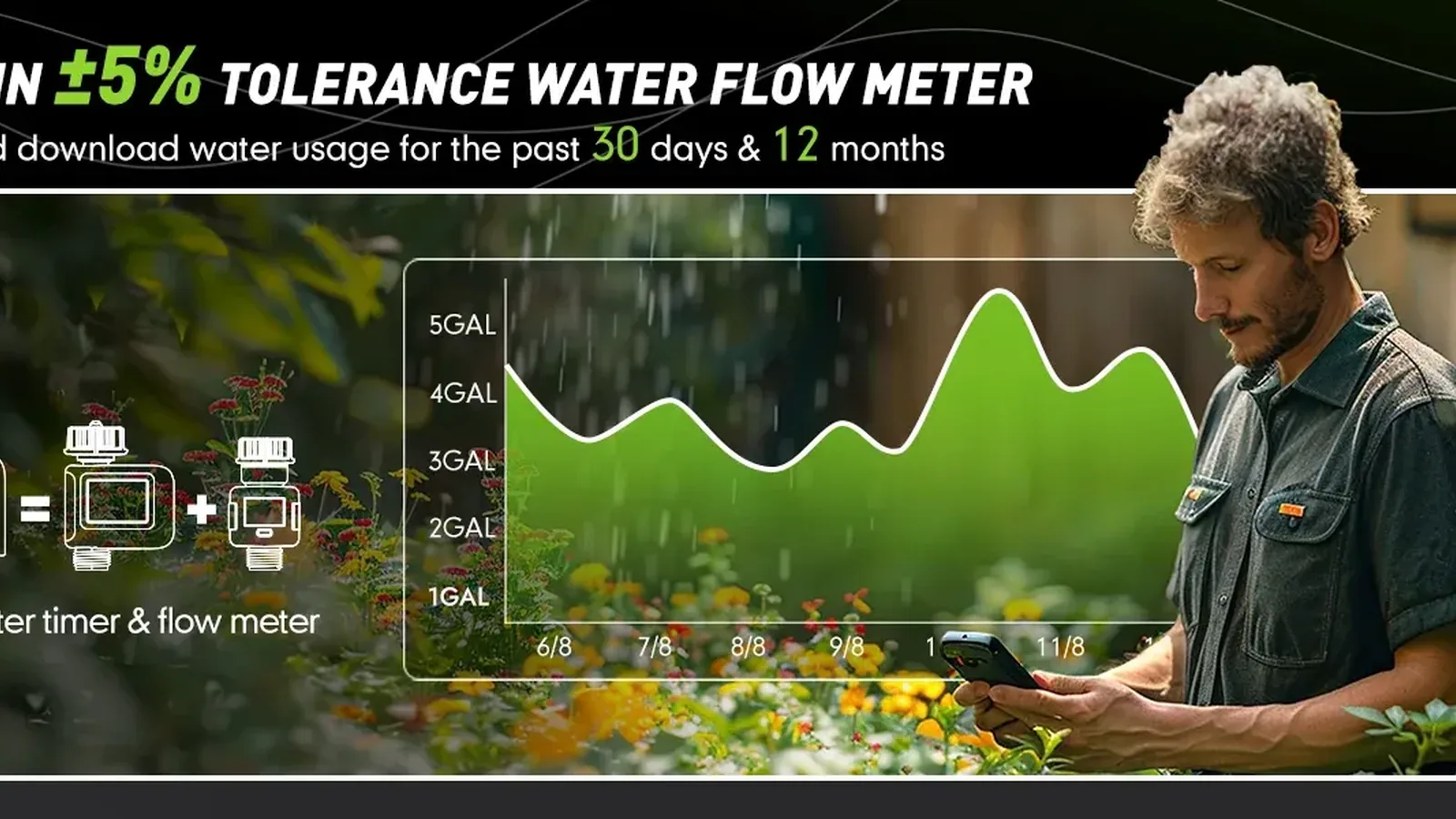
A reading made late at night with little household demand may not represent an irrigation run during breakfast. Water Regs UK notes that a quiet-period pressure measurement has limits and does not account for transient conditions. Flow is a different measurement, but the same planning principle applies: record the circumstances rather than treating one favourable test as permanent.
Flow rate is not water pressure
| Measurement | What it tells you | What it cannot establish alone |
|---|---|---|
| Litres per minute | Volume delivered at the test point over time | Working pressure at every downstream component |
| Static pressure | Pressure when no water is flowing | How the supply behaves under irrigation demand |
| Working pressure | Pressure while the system is flowing | Total capacity without a corresponding flow measurement |
| Emitter rating | Intended output under stated conditions | Actual output in an unverified layout |
Do not choose a pressure regulator from the bucket result alone. Likewise, do not infer controller throughput from the number of outlets. Pressure, flow, component limits and the garden layout must be checked together.
Turn the result into an irrigation flow budget
List each planned emitter or watering device and its documented demand under the intended conditions. Add the items that will run at the same time. Compare that total with the measured supply, allowing room for real-world variation rather than designing exactly to a single best reading. If demand is too high, reduce simultaneous demand, split the layout into separately operated sections, or reconsider the watering method.
The drip irrigation kit guide can help identify the parts and garden jobs that belong in that list. The garden irrigation selection guide is useful if the test shows that a proposed sprinkler or mixed layout is unrealistic.
Do not convert the flow budget into a claim that a particular controller supports a stated number of drippers. The safe product facts for this site do not provide a maximum flow, minimum pressure or outlet-capacity figure. Obtain those figures from applicable, current documentation before making a compatibility decision.
Check flow after components are added
The bare-tap test is only a baseline. With each component installed according to its instructions, make a supervised downstream measurement where practical. A timer, filter, regulator, connector and length of tubing can change the delivered result. Test the intended operating path rather than assuming the original tap figure reaches the last emitter unchanged.
- Record the bare-tap flow.
- Record flow after documented backflow and timer components.
- Record the result for each intended watering section.
- Compare actual emitter output at near and far points.
- Investigate sudden changes, leaks or noise before leaving the system unattended.
RHS watering guidance emphasises matching watering to plant, soil and weather conditions. A strong supply is not a reason to apply more water than the root zone needs. The test is about controlling a design, not maximising consumption.
Common mistakes that make the test misleading
- Guessing the container volume rather than using a reliable mark.
- Starting the stopwatch before water reaches the container.
- Testing through an unknown hose restriction and calling it the tap result.
- Using only the fastest of several inconsistent readings.
- Ignoring household demand that will occur during the planned watering period.
- Confusing litres per minute at the tap with litres per hour at each emitter.
- Assuming a physical connection proves pressure or controller compatibility.
FAQ
What container size should I use?
Use a known volume that is large enough for a measurable fill time but safe for you to handle. Ten litres is convenient for the arithmetic, but a properly marked smaller container works when the formula is applied correctly.
How many times should I test the tap?
Make at least three consistent tests for a baseline, then repeat at a realistic time if household demand may affect the supply. Keep all readings and investigate large variation.
Can a bucket test tell me the water pressure?
No. It measures volume over time. Pressure requires a suitable gauge and correct interpretation, preferably under working conditions. Seek qualified help if you are not equipped to test it safely.
Can I calculate how many drippers the controller will run?
You can estimate total irrigation demand from documented emitter outputs, but you still need verified controller limits, working pressure and real downstream measurements. The site does not support a product-specific dripper count.
Should I test during a hosepipe ban?
Check the current notice from your own water supplier first. A short test is still water use, and a retailer article cannot grant permission or interpret a property-specific exemption.
Conclusion: measure before dividing the garden into zones
A reliable outdoor-tap flow test uses a known volume, accurate timing, repeated readings and a clear note of operating conditions. Pair the result with working pressure and every component's documented limits. If measured supply and the garden plan support two separately controlled watering lines, you can view the dual-valve smart irrigation controller as a possible next step. Its page does not establish a flow capacity or UK connection fit, so verify those details independently.
Sources and further reading
- rhs.org.uk: Watering should respond to plant, soil and weather rather than a fixed routine
- waterwise.org.uk: UK water-efficiency and current supplier-status checking context
- waterregsuk.co.uk: Limits of quiet-period pressure readings and transient conditions